
Content
- Anyone Can Provide and Benefit From It
- Certified Smart Contract Auditor™
- What is Cryptocurrency Staking? Explained in Layman’s
- What are the Risks and Limitations of a Liquidity Pool?
- Anyone can become a liquidity provider and earn:
- Know Everything about Crypto Liquidity Pools
- How can you earn passive income from Liquidity Pools?
- OpenAI Launches Game-Changing GPT-4 Artificial Intelligence Model
By offering liquidity, they guarantee trade and are used widely by some decentralized exchanges. Ultimately, liquidity pools allow you to simply and efficiently exchange assets as a result of the liquidity provided by depositors and the innovation of smart contracts. These assets are balanced with each other to form a market for traders and provide access to permanent liquidity. As we’ve mentioned, a liquidity pool is a bunch of funds deposited into a smart contract by liquidity providers.
Liquidity pools operate in a competitive environment, and attracting liquidity is a tough game when investors constantly chase high yields elsewhere and take the liquidity. But what if there is no one willing to place their orders at a fair price level? As anyone can be a liquidity provider, AMMs have made market making more accessible. Further, as a HODLer, they seem to be a lucrative means of earning passive income. You can try and start with Uniswap and then explore the rest of the platform. Now, let us understand the structure of a dual asset liquidity pool.
In traditional finance, liquidity is provided by buyers and sellers of an asset. A decentralized exchange without liquidity is equivalent to a plant without water. The advantage of using liquidity pools is that it does not require a buyer and a seller to decide to exchange two assets for a given price, and instead leverages a pre-funded liquidity pool.
Anyone Can Provide and Benefit From It
Dark pools allow funds to line up and move large blocks of equities without tipping their hands as to what they are up to. Modern electronic trading platforms and the lack of human interaction have reduced the time scale on market movements. This increased responsiveness of the price of an equity to market pressures has made it more difficult to move large blocks https://xcritical.com/ of stock without affecting the price. Thus dark pools may protect traders from market participants who use HFT in a predatory manner. Truly dark liquidity can be collected off-market in dark pools using FIX and FAST protocol based APIs. Dark pools are generally very similar to standard markets with similar order types, pricing rules and prioritization rules.
@SaucerSwapLabs were you impacted by this or not by this? Mixed messages here.. what liquidity pools were impacted and how can I check my funds are safe? pic.twitter.com/txppCMqPd9
— BuckCrypto (@BuckCrypto_) March 10, 2023
A DEX generally uses a dual asset pool, making it a complete market for a particular pair of assets, such as BTC/USDT, ETH/DAI, etc. A lending platform uses a single asset pool where a pool consists of one asset only. Thus, a liquidity pool is the essential component of any DeFi Platform. Deposit a 50/50 split of BTC and USDT to the BTC-USDT liquidity pool. In this case, you would deposit $10,000 worth of USDT and $10,000 worth of BTC. Here is an example of how that works, with a trader investing $20,000 in a BTC-USDT liquidity pool using SushiSwap.
Certified Smart Contract Auditor™
CoinDesk journalists are not allowed to purchase stock outright in DCG. This happens when the price of your assets locked up in a liquidity pool changes and creates an unrealized loss, versus if you had simply held the assets in your wallet. Risk of hacking exploits because of poor security protocols, causing losses for liquidity providers. Uniswap – This platform allows users to trade ETH for any other ERC-20 token without needing a centralized service. It is an open-source exchange that lets anyone start an exchange pair on the network for free.
Make sure to complete thorough research before investing in double-sided liquidity pools. Add BTC and USDC to the BTC-USDC liquidity pool in a 50/50 split, which in our case will be 500 dollars in each asset, meaning you will receive your coins according to the current exchange rate. After the agreed-upon amount of time, you’ll be given the SUSHI token you committed to keeping secure. It can be for a set period of time, like a week or several months.
- However, if you want expertise in the field, you can probably check out some cryptocurrency courses.
- Smart contracts manage the assets added to a pool; there is no central authority or custodian for these assets.
- You might have the option to store those tokens into another pool and acquire a return.
- Different smart contracts enable various use cases of Liquidity Pools.
When a new pool is created, the first liquidity provider is the one that sets the initial price of the assets in the pool. The liquidity provider is incentivised to supply an equal value of both tokens to the pool. This concept of supplying tokens in a correct ratio remains the same for all the other liquidity providers that are willing to add more funds to the pool later. Trades with liquidity pool programs like Uniswap don’t require matching the expected price and the executed price. AMMs, which are programmed to facilitate trades efficiently by eliminating the gap between the buyers and sellers of crypto tokens, make trades on DEX markets easy and reliable. Liquidity pools are crypto assets that are kept to facilitate the trading of trading pairs on decentralized exchanges.
What is Cryptocurrency Staking? Explained in Layman’s
The order books can also be used to identify the areas of the market that are creating support and resistance. For example, strong support may be found in an area with several buy orders, while you may find resistance support in an area with multiple sell orders. This website is using a security service to protect itself from online attacks.
However, we cannot ignore the possible risk exposure of liquidity pools. Uniswap’s internal algorithm called Automated Market Makers decides the ratio at which both tokens would be deposited into the pool. Thus, the structure of a pool is something that is decided by the platform itself. If a liquidity provider intends to get back the liquidity they provided in addition to accrued fees from their portion, their LP tokens must be burned. Allows people to provide liquidity and receive rewards, interest or an annual percentage yield on their crypto. The simple liquidity pool concept has provided a solution to a large, complex problem like centralization, which has been one of the major challenges for the crypto space.

Pipeline Trading Systems LLC, a company offering its services as a dark pool, contracted an affiliate that transacted the trades. In the Pipeline case, the firm attempted to provide a trading system that would protect investors from the open, public electronic marketplace. In that system, investors’ orders would be made public on the consolidated tape as soon as they were announced, which traders characterized as “playing poker with your cards face up”. The service Pipeline offered was to find counterparties for various trades in a private manner. Following its 2011 settlement of the SEC’s claims against it, the firm rebranded itself as Aritas Securities LLC in January 2012. To lessen this adverse impact on price discovery, off-market venues can still report consolidated data on trades publicly.
What are the Risks and Limitations of a Liquidity Pool?
The order is queued along with other orders but only the display quantity is printed to the market depth. Such orders will, therefore, get filled less quickly than the fully public equivalent, and they often carry an explicit cost penalty in the form of a larger execution cost charged by the market. Iceberg orders are not truly dark either, as the trade is usually visible after the fact in the market’s public trade feed. When you deliver an AMM liquidity, there is a potential that you could experience a quick loss. Compared to “hodling,” this kind of loss results in a monetary loss.
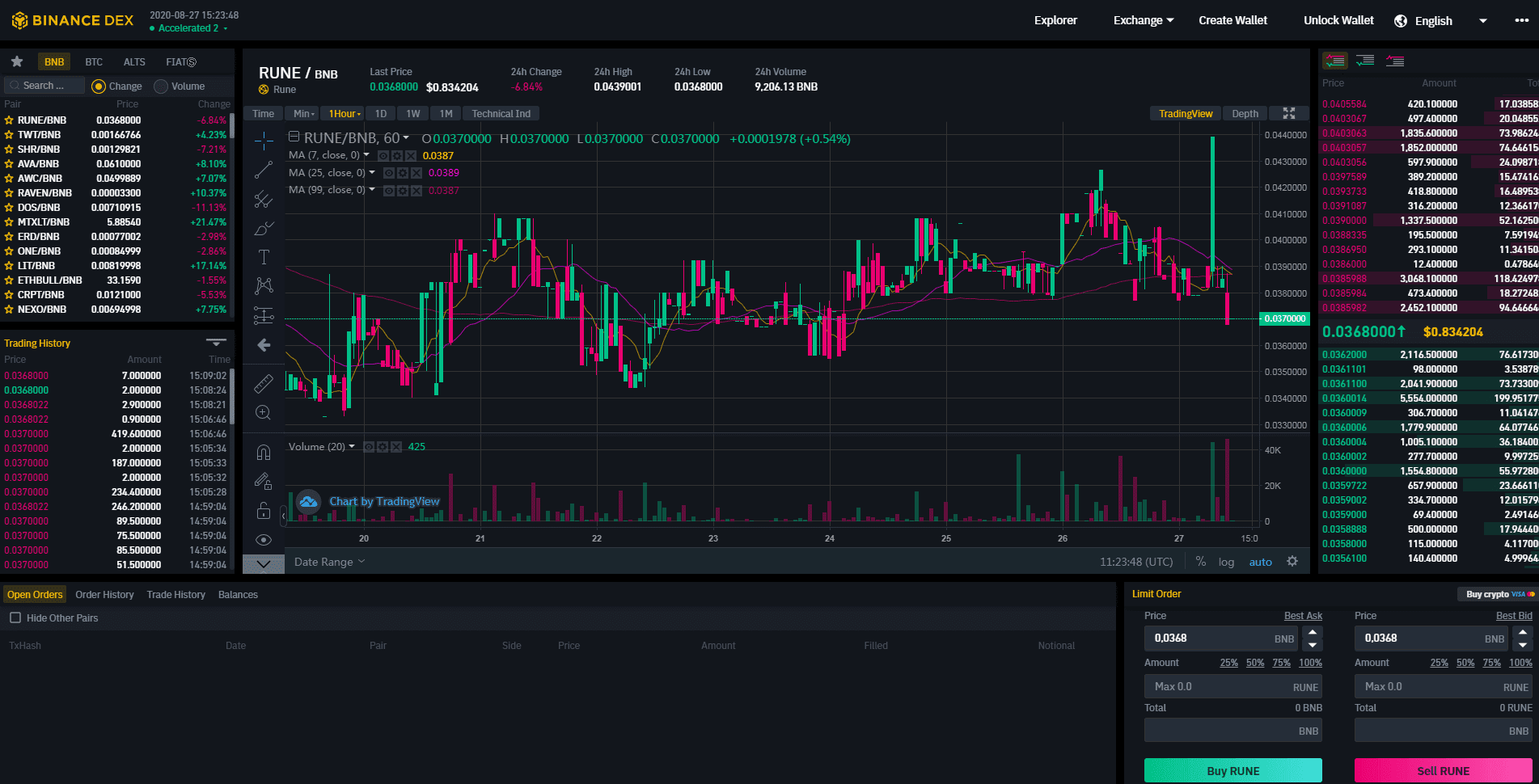
On top of that, every interaction with a smart contract cost a gas fee, so market makers would go bankrupt by just updating their orders. The main reason for this is the fact that the order book model relies heavily on what is crypto liquidity having a market maker or multiple market makers willing to always “make the market” in a certain asset. Without market makers, an exchange becomes instantly illiquid and it’s pretty much unusable for normal users.
Then, the newly minted tokens are distributed proportionally to each user’s share of the pool. A liquidity pool is basically funds thrown together in a big digital pile. But what can you do with this pile in a permissionless environment, where anyone can add liquidity to it? Let’s explore how DeFi has iterated on the idea of liquidity pools. The exchange generally issues a derivative token as a receipt of funds deposited by you.
Anyone can become a liquidity provider and earn:
Liquidity pools aim to address the low liquidity problem successfully and thus guarantee that the price of a token does not swing significantly after performing the order of a single large trade. Bancor made one of the first initiatives to incorporate liquidity pools, andUniswapmade it widely popular. In simpler words, Liquidity Pools are the trading aspect of a decentralized exchange. Their role is to increase the market’s liquidity among market participants.

Another type of adverse selection is caused on a very short-term basis by the economics of dark pools versus displayed markets. If a buy-side institution adds liquidity in the open market, a prop desk at a bank may want to take that liquidity because they have a short-term need. The prop desk would have to pay an Exchange/ECN access fee to take the liquidity in the displayed market.
Know Everything about Crypto Liquidity Pools
Curve – A decentralized liquidity pool for stablecoins based on the Ethereum network. It provides reduced slippage because stablecoins aren’t volatile. One of the first decentralized exchanges to introduce such a system was Ethereum-based trading system Bancor, but was widely adopted in the space after Uniswap popularized them. This trading model’s major disadvantage is when both parties do not agree on a fair price; the trade is at risk of being off. Another disadvantage is the scenario where there is a shortage of coins, making it difficult to leave the market to the forces of demand and supply. To salvage any of these situations, the market makers are introduced to facilitate trade between parties.
They make it possible for decentralized lending, trading, and other functions. Almost every aspect of DeFi is presently powered by smart contracts, and this trend is likely to continue in the future. As a result, liquidity pools are a great way to use cryptocurrencies for passive income. To better comprehend the technology and its advantages, you can begin learning DeFi. The core technology behind the current DeFi ecosystem is liquidity pools.
There are multiple ways for a liquidity provider to earn rewards for providing liquidity with LP tokens, including yield farming. The ratio of tokens in it determines the value of tokens in every liquidity pool. The size of the trade-in proportional to the size of the pool also determines the value of tokens. A large pool and less trade mean that the cost of tokens will decrease. Price adjustment of liquidity pools in DeFi is determined by a mechanism known as the Automated Market Maker . Many known liquidity pools use a constant algorithm to keep the product of token quantities for both tokens.